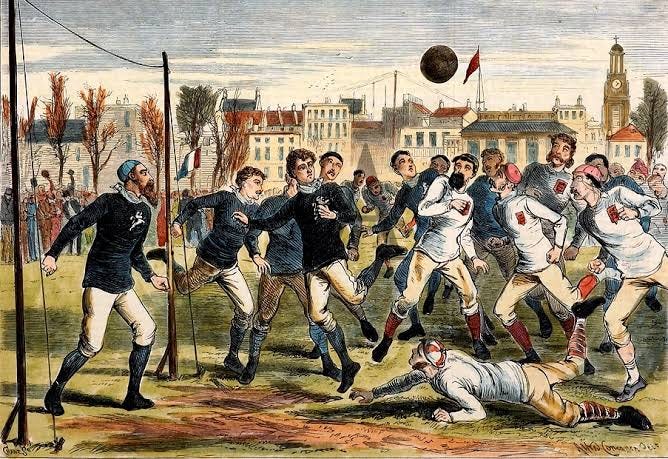
How English Football Fell Into Private Hands
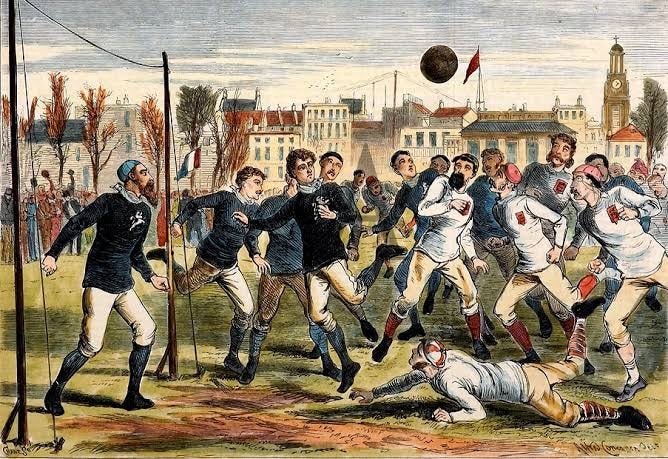
Most football supporters have a familiar image of a club owner. For those whose formative years were the 1970s and 1980s, it might be the old-school chairman: a local boy-made-good, often a prominent figure in the town or city, who supported the club and believed that commercial experience could help it succeed. For supporters raised in the Premier League era, the stereotype is more likely to be the Russian oligarch, the Middle Eastern nation state or the soulless dead-eyed American investment group.
These figures may look very different, but the relationship between English football and business is far older than the Premier League. Rows between managers and directors, public declarations of boardroom support followed by a manager’s dismissal, and arguments about money and ambition have long been part of football culture. Owners and chairmen have become as much a part of supporters’ memories as players and managers.
So how did English football club ownership develop? How did a game that began as a largely informal community pastime become an industry in which wealthy individuals and companies could wield enormous influence? The answer lies in the changing nature of football itself: from medieval folk game, to organised sport, to professional business.
The Origins of Football in England
The history of football in England stretches back many centuries. One of the earliest known references to a game resembling football appears in an account written around 1175 by William Fitzstephen, a biographer of Thomas Becket. Describing Shrove Tuesday festivities in London, he wrote of young people heading to open ground outside the city to play what he called the ‘famous game of ball’. The event attracted spectators, often older people who no longer took part themselves.
Medieval football bore little resemblance to the modern game. It was a sprawling contest played through streets and open spaces, with few rules and plenty of violence. Serious injuries were possible, and authorities sometimes tried to suppress games because of the disorder surrounding them.
Despite these attempts, football became embedded in English culture. It was enjoyed by different social groups, but its early form was particularly associated with the lower classes. That popularity also left the game vulnerable to changes in working life. When industrialisation transformed the country, the traditional conditions that had allowed mass football to flourish began to disappear.
The Industrial Revolution and the Decline of Traditional Football
For centuries, much of England remained agricultural, and the rhythms of working life could leave room for seasonal customs and communal games. The Industrial Revolution changed that relationship. Factories and mills expanded, towns grew and workers moved into increasingly regimented employment. Working hours could be long, holidays were limited and even Sundays were not always free.
Traditional football did survive in some communities, particularly in parts of the north, but the old mass games became less common. For many working people, there was simply less time and space for them.
And it’s possible that football would have disappeared completely had it not been for the saving presence of the most improbable group in society that you would ever imagine riding to the rescue of the game: the pupils and masters of the English public school system.
How the Public Schools Helped Shape Modern Football
Despite working-class dominance of early football, the sport had also found its way into the country’s public schools.
Once there, it quickly evolved, with each institution developing its own version.
Like much early football, what was played in the public schools during the 17th and 18th centuries bore little resemblance to the game we know today.
The game remained fairly anarchic, with scrums still evident, forward passing often forbidden and at Eton it was even illegal to turn your back on a charging player, as this was considered ungentlemanly (although apparently it was perfectly ‘gentlemanly’ to kick the shit out of your opponent at the same time).
Key to the game becoming more recognisable to our modern eyes was the revolution that took place in the public school system during the mid-19th century.
Prior to this, aside from a sprinkling of Latin and Greek, pupils had largely been left to their own devices; leading to a culture of unruliness in schools (several even suffered mutinies).
A reform movement, led by the educator, historian and headmaster of Rugby, Thomas Arnold, began to initiate change during the early Victorian years.
This was complemented by the arrival of more middle-class students in the schools, whose parents demanded something more for their children than a smattering of Latin and Greek and the occasional beating.
In time, greater emphasis was placed on education and discipline, the latter underwritten by the prefect system.
As an integral and wildly popular part of student life, football was pulled into this wider effort to bring order to the schools.
The game began to get greater support from headmasters who thought that a better structured, organised and less anarchic sport would be a valuable tool in their efforts to instill a stronger sense of discipline among their pupils.
The Development of Football's Written Rules
To satisfy the desire to bring greater structure to football, and also eliminate anomalies, written rules governing the sport first began to appear in the 1840s.
Through this process of codification, public school men from different institutions were able to recognise the common features of football played elsewhere, a process that would ultimately lead to matches taking place between schools and not just within them.
Preserving and then modernising the game within the public school system was all well and good, but this didn’t really benefit the rest of society for whom football remained a pastime associated with a long-lost age.
This would soon change.
Football Returns to the Working Classes
As the sport became a more entrenched part of public school life (often becoming a compulsory activity) old-boys began playing the game after they had left.
What started as just a handful of them founding clubs linked to their former school, such as the Old Harrovians and the Old Rugbeians, quickly spread as more and more established new clubs of their own.
In Lancashire, clubs such as Turton and Darwen were associated with former Harrow pupils who returned north and encouraged local men to take up the game. Football was becoming more structured than the medieval versions, with fewer players, clearer rules and less scope for the entire contest to descend into chaos.
Church workers, clergy and charities encouraged football in poorer neighbourhoods. They saw organised sport as a constructive use of the leisure time working people gradually gained through political reform and trade-union campaigning. Some reformers considered football a more respectable alternative to drinking or gambling.
Football suited urban life. It required little equipment beyond a ball, could be played on a variety of surfaces and was easy for spectators to understand. It also offered a shared identity in communities reshaped by industry, migration and rapid urban growth.
The Football Association and the Birth of Modern English Football
The formation of the Football Association (FA) in 1863 was a major step in the development of the game. Representatives of clubs met in London on 26 October to establish a common set of rules. The resulting code helped separate association football from rugby by outlawing practices such as handling the ball and certain forms of physical interference.
Agreed rules made it easier for clubs to arrange matches and develop regular competition. The FA also provided a framework for a rapidly spreading sport: it had ten affiliated clubs in 1867, around 1,000 by 1888 and approximately 10,000 by 1905.
The first clubs were generally members’ organisations. Players and supporters paid subscriptions, and members elected committees to run the team. Football was not yet dominated by outside owners. Clubs such as Aston Villa and Woolwich Arsenal were managed through elected structures in which members had a meaningful say.
The First Football Supporters and the Role of Local Business
As matches became more popular, people began attending who were not playing. Early spectators included club members, former players, friends and relatives.
Businessmen did sometimes help clubs, but their involvement was often tied to a workplace or local connection rather than a straightforward investment strategy. At Thames Ironworks in east London, for example, businessman Arnold F. Hills helped establish a football team with works foreman Dave Taylor. The club, which eventually became West Ham United, was run by its members, but Hills provided facilities and supported arrangements intended to protect players’ wages if they were injured.
Other local industrialists offered occasional financial help. In 1883, Lancashire businessman Sydney Yates gave Blackburn Olympic £100 to support special training ahead of the FA Cup Final. Such assistance mattered, but it was not yet the same as the systematic control associated with modern football ownership.
The Rise of Professional Football in England
The arrival of professional football changed the economics of the game. Many early enthusiasts, particularly those influenced by public-school amateurism, believed players should compete for enjoyment rather than wages.
Competitive ambition, however, created pressure to recruit the best players. Clubs began offering payments secretly, providing jobs or giving other inducements to persuade talented footballers to join them. One of the earliest known players to move south for football-related financial reasons was James Lang, a Glaswegian shipyard worker who joined Sheffield’s The Wednesday in 1876. Although he was ‘technically’ employed at a knife factory, football took up much of his time.
The Football Association tried to defend amateurism by punishing clubs that paid players, but the practice spread. Northern clubs, especially in Lancashire, were among the strongest advocates of professional football. Preston North End and Burnley were among those that challenged the restrictions and threatened to break away if the FA refused to change its position.
Professionalism was eventually legalised in 1885. The decision accelerated a shift already under way. Better-organised professional teams increasingly outperformed amateur sides, and clubs such as Blackburn Rovers, West Bromwich Albion and Aston Villa rose to prominence. The early dominance of amateur teams such as Wanderers, Old Etonians and Oxford University gave way to clubs with stronger links to working-class communities and a more professional approach.
Rising Attendances and the Development of Football Stadiums
From being a sport watched by a handful of people in the 1860s, by the turn of the century the popularity of football had grown enormously.
In 1875 only two games had pulled in crowds of more than 10,000 people. Within a decade that had increased to 18.
But the most dramatic rise in attendances occurred in the 1890s, following on from the establishment of the Football League in 1888. During the league’s first season 602,000 people watched the matches between the country’s 12 leading clubs. By the eve of the First World War the figure had reached 9 million.
At first, fans watched from earth banks or basic uncovered terraces. As demand grew, clubs recognised that larger and better facilities could bring in more money. Between 1890 and the outbreak of the First World War, purpose-built grounds became increasingly common.
Stadium construction required more capital than subscriptions and gate receipts could always provide, pushing clubs towards new ways of raising money.
How Football Clubs Became Limited Companies
One solution was to convert a club into a joint-stock company. This allowed shares to be issued to raise capital and gave investors limited liability: if the company failed, shareholders were generally not personally responsible for all its debts. The structure made investment less risky and offered clubs a route to financing stadums, wages and other costs.
Small Heath, later known as Birmingham City, became the first club to take this route in 1888. The model spread rapidly. By 1921, 84 of the Football League’s 86 clubs had become private companies.
In theory, incorporation did not automatically mean that wealthy businessmen had to take control. Shares could be bought by supporters, including working-class fans. Woolwich Arsenal’s 1893 incorporation, for example, involved shares being allocated to hundreds of people, most of them working men from the Plumstead and Woolwich area, many likely employed at the Royal Arsenal.
In practice, however, working-class supporters often struggled to buy enough shares to influence a club. Even where clubs tried to make shares affordable, uptake could be limited. Local businessmen and middle-class professionals were usually better placed to buy larger holdings, and those with the biggest stakes were more likely to secure board positions.
At Liverpool, around the turn of the twentieth century, the club’s eight directors owned 60 per cent of the voting shares. The example illustrates how ownership and influence became concentrated in the hands of a relatively small group, even while ordinary supporters continued to provide much of the atmosphere, loyalty and income that sustained the game.
Why Did Businessmen Invest in Football Clubs?
Football was rarely a reliable investment. Even though clubs such as Everton, Chelsea and Liverpool could make profits, many struggled.
If direct financial returns were so uncertain, why did businessmen become involved? For some, football offered indirect commercial benefits. Brewers were particularly prominent. Advertising at grounds could promote their products, while giving players or former players pubs to run could help increase trade.
Other investors were motivated by genuine enthusiasm for football. Some were already involved in club committees before incorporation and continued in leadership roles afterwards.
And then there was civic pride. By the late Victorian period, football clubs had become major institutions in their towns and cities. They represented local identity, offered entertainment and gave communities something to rally around. For prominent local figures, becoming a director or chairman could be understood as a form of public service, a way to support the town and enhance its reputation.
John H. Davies at Manchester United, for example, was known for supporting local sports and charitable causes. For people like him, football ownership could combine civic responsibility, personal passion and social standing, even when it did not deliver substantial dividends.
How Football Club Ownership Changed Forever
By the eve of the First World War, the transformation of English football club ownership was largely complete. Private companies with limited liability had become the dominant model in the professional game, while democratically run members’ clubs had been pushed towards the margins. The people who controlled clubs were increasingly those with the money to buy significant shareholdings, rather than the supporters who had founded and sustained them.
This change was not caused by one event. It emerged through a series of developments: the revival of football in industrial communities, the creation of common rules, the growth of the FA and Football League, the legalisation of professionalism, rising attendances and the need to finance larger stadiums and competitive teams. Each stage made football more organised and popular, but also more expensive.
The history of football club ownership is therefore inseparable from the history of football itself. The game began as a largely informal community pastime. It developed into an organised sport, then a professional competition and, eventually, a commercial industry. As the financial demands grew, ownership moved away from members and towards investors who could supply capital.
And since then, at heart little beyond scale has changed. The same model remains but the sums are now so large at the top levels of the games, that the ‘local-boy-made-good’ can no longer cut it. That’s how we ended up with those Russian oligarchs, those nation states, those soulless dead-eyed American hedge funds.
English football faced a crossroads during the late-Victorian era when the sport was in its professional infancy. It could’ve remained true to the membership model, as other countries did, and not taken the private path. But in many ways, the sheer popularity of it prevented that. Such was the appetite for football; clubs were faced with little alternative but to ditch the old ways and embrace private capital.
That moment dictated the kind of football we have in England. Not all of us like it, with many looking enviously at fan control in places like Germany, Norway and Sweden. But our football development was different. This was the country where the sport exploded bringing with it the inevitable arrival of the businessman. For good and ill.