Casual State of Mind
Take a look at those passing through the turnstiles of any football ground on a Saturday afternoon and a certain sartorial theme will catch your eye. From the floor heading up, trainers will be near ubiquitous, and always branded (with the likes of Nike and Adidas dominating), trackies and jeans will follow (the former taking the same branded line) and as you reach the torso (depending on the time of year), you might see an oversized coat from a brand like North Face.
It’s a look that doesn’t surprise, so embedded has it become in terrace culture. It is the ‘look’ of the football supporter. And it seems to have been that way for as long as any of us can remember. But it wasn’t always the case. When my dad first began going to watch Everton back in the 1950s, most of the crowd was suited and booted, working-class men dressing for the weekend. In the late-1960s and early 1970s, a shift took place, part of society’s wider rejection of the norms that had defined the post-war generation. Denim made itself felt, sheepies and leather jackets became more commonplace, the suit gradually easing from sight. It was a period of flux, where it became difficult to define a ‘fan’ sartorially. As a whole, football supporters became a broad church, one that could embrace the arl’ feller still wearing his suit at one end and the Millwall skinhead, with his Doc Martins and his drainpipe jeans, at the other.
But eventually, the flux came to rest, setting on a ‘look’ that has held sway, in some form, since. It’s one that has its roots in a subculture that emerged from the terraces nearly forty years ago: The Casuals.
In the late-1970s and early 1980s, when Casuals first began to emerge, youth culture in Britain was a landscape peopled by a cavalcade of disparate tribes. There were Punks, Post-Punks, Mods, Skins, Goths, New Romantics, and a host of lesser tribes, each with their own norms, their own dress codes, their own tastes.
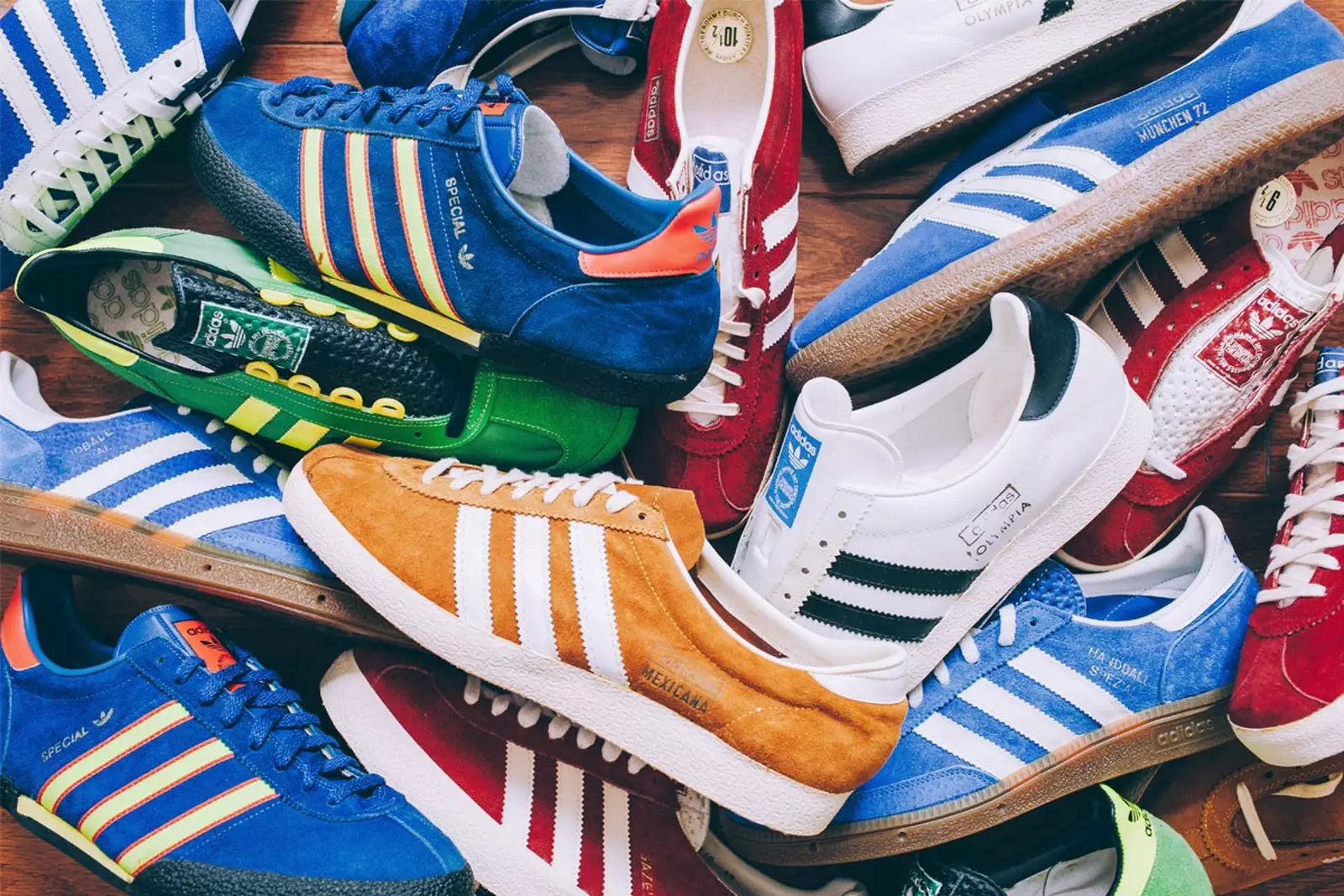
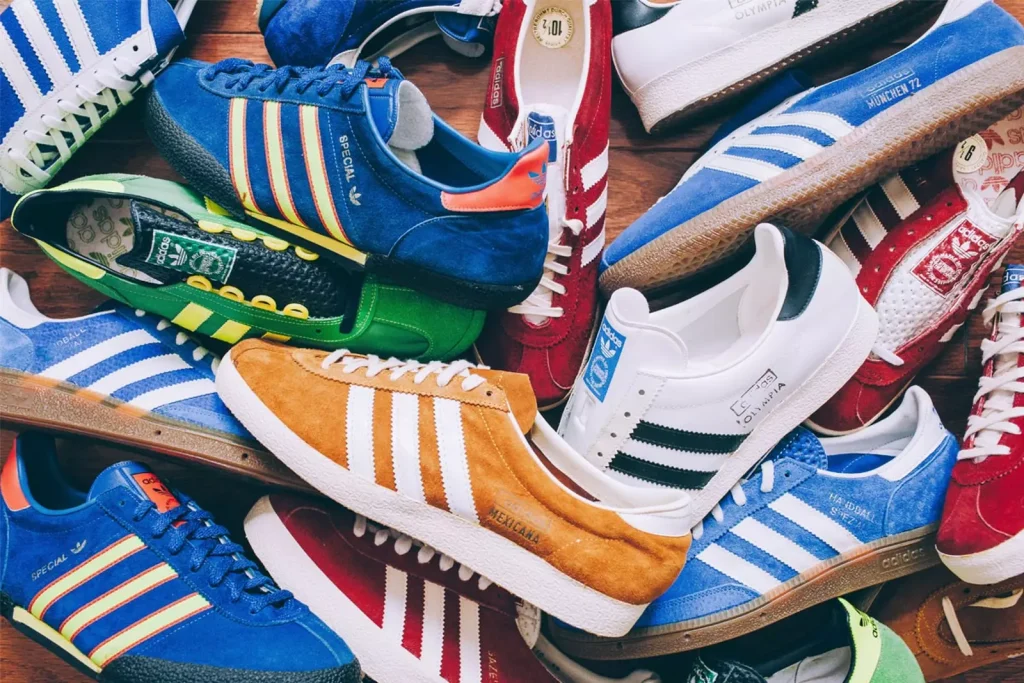
The Casuals were defined, more than anything else, by their labels. Where many other scenes seemed to embrace an anti-commercial, DIY aesthetic, the Casuals veered in the opposite direction. Everything was about expensive brands, with the likes of Fila, Lacoste, Adidas, and Kappa, dominating their choices.
Where this new tribe came from is a debate that has raged for decades. Like most scenes, London tries to get in on the act, pointing to the similarity that existed between the Soul Boys and the Casuals, specifically both groups’ desire to invest in labels. Further north, Manchester stakes a claim via the Perries, who emerged in the late 1970s with a penchant for brands like Fred Perry, Peter Werth and Lois. And then there’s Liverpool, which makes the loudest and most long-lasting claim.
The story goes like this. As Liverpool FC travelled across Europe during the late-1970s and early-1980s their fans came into contact with fashionable continentals kitted out in flashy European sportswear brands. Inspired by their style, they brought back what they could. When those left behind in the city (of both colours) feasted their eyes on this new attire, demand exploded.
No ‘look’ or scene ever develops in true isolation and it’s likely that the Perries and the Soul Boys played their part. As too did the fans of any club that regularly adventured around Europe, particularly the likes of Celtic and Aberdeen. They were all absorbing continental influences and bringing them back to their respective cities.
But through these different strands, what was certain is that by the early 1980s, across the country, the way that young lads dressed when going to the match had changed irrevocably.
Although often lumped together as one homogenised mass, when compared with other tribes that populated the cultural landscape of 1980s Britain, the Casuals were not united in the same way. Where a Goth from Leeds was pretty much indistinct from a Goth from Brighton, the Casuals were more disparate. ‘Scallies’ in Liverpool, ‘Perries’ in Manchester ‘Soul Boys’ in London, each had their own tastes, their own norms, their own music. There might have been some cultural overlap, some bands in common, some fanzines read, but there was not the same sense of cohesive unity as there was with something like Punk, Goth or New Romanticism.
There wasn’t even, necessarily, an acceptance of the term, ‘Casual’. The term was an external one, applied to them, not by them. And even when it was applied, it was often done so reluctantly. As a fashion movement, and it was unequivocally an enduring fashion shift, it was barely noticed to begin with. The fashion world and press remained unimpressed, resolutely turning their attention to other, more overtly creative movements, like New Romanticism. It didn’t matter that what was happening on the terraces was transforming how working-class lads dressed, it was shop-bought, acquired not created.
While cultural snobbery can explain some of this, it was also the case that the ‘look’ carried with it baggage that made it toxic to some. Not all hooligans in the 1980s wore Casual clothes and not all fans who wore Casual brands were hooligans. But there was enough of an overlap to tarnish what was happening and write it off as something unsavoury.
In the popular mindset, the image of the ‘hooligan’ during the early-1980s changed from the stereotypical Millwall skinhead, to the stanley-knife-wielding scally, dressed in Adidas Stan Smiths, a Lacoste jumper and Fila trackie top. With every skirmish, every headline, every image of a ‘Casual’ being carted off by the police, the chances of the wider world taking an interest in what was happening in fashion terms, and what this subculture represented, receded.
And yet, it was nothing to do with the clothes. Those involved could have been wearing expensive three-piece suits and would still have gone out there to cause mayhem. Hooligans were going to be hooligans, irrespective of what they wore. They just happened to be young football fans, and most young football fans were Casuals.
Few sartorial styles remain locked in stasis, and the Casuals were no exception. The ‘look’ was restless, brands coming and going in popularity, adherence to a fading one marking its wearer out for ridicule. Sometimes it was gradual, other times it was dramatic. Perhaps the biggest change came in the late-1980s, once again through the influence of Liverpool FC. Following the horror of Heysel, when rampaging Liverpool fans contributed to the deaths of 39 Juventus supporters, English sides found themselves banned from Europe. With no more jaunts abroad, eyes turned inward, leading to homegrown brands, such as Pringle, Henri Lloyd, and Lyle & Scott finding their way into the wardrobe.
This restlessness applied to Casualism’s relationship with the world beyond football too. For much of the late-1970s and 1980s, the ‘look’ was confined to the terraces; a resolutely working class/football thing. But as the 1980s bled into the 1990s, fuelled by the ‘new lad’ movement (all trainers, branded gear, and faux-working class attitude), football’s restoration as a sport and a certain, often unsavoury, glamorisation of the bad old days of football hooliganism, it expanded to touch other parts of society.
It might have been watered down as it spread but the Casual ‘look’ became a staple of the high street. And there it has stayed. Take a stroll down any town centre on a Saturday afternoon and you will see kids in trackies, trainers and big coats. While other influences might have played their part in this trend (such as the impact of American culture on our love of trainers) the Casuals were pioneers, wearing clothes like this when so few other people did.
A big part of the reason why the Casual ‘look’ spread beyond its origins can be attributed to its love of brands. Of all the scenes that were around back then, it was one that seemed to chime most with the way that the country was heading. They might have been working-class lads wearing these labels, hailing from good, left-wing enclaves like Liverpool, Manchester and Glasgow but nevertheless, they were embracing the consumerist culture that would thrive and blossom in Britain under Thatcher and which would go on to become the country’s dominant culture in the years that followed.
But what of the rest of Europe? Did we just take and never give back. Did this ‘European’ look remain confined to these shores?
‘The Casual scene and look is becoming more popular in the rest of Europe, where countries like Netherlands, Sweden, Denmark and of course Italy (where many popular casual brands were founded) are taking the lead’, says the Casual Ultra, a Twitter account run by a supporter of Dutch Eerste Divisie side SC Cambuur.
‘Casual fashion is a way of identifying oneself with the camaraderie of football. To be different than other football supporters who are wearing club colours like scarves and shirts. Being a Casual is a way to separate yourself from regular supporters through your clothing and lifestyle. And that’s why it’s catching on’, he argues.
It’s ironic that when the media wants to depict a stereotypically anti-European white working-class man, they give us an image of the ‘Casual’, the ‘EDL-hoolie’ resplendent in branded trainers and trackies. Perhaps they don’t appreciate the provenance of the image, a story that represents one of the continent’s greatest modern examples of cross-cultural exchange, something that lies at the heart of the European dream. The veneration of the look by those in Europe completes a circle that first began being drawn a generation ago.
When the Perries, the Scallies, and the Soul boys went mad for Adidas Samba, Sergio Tacchini trackie tops, and Ellesse jackets, few would have thought what a lasting impact their appetites would have, not just on terraces but on British culture too. For a term that implies relaxation, it’s turned out to be woefully inappropriate. Because Casualism was anything but. Far from taking it easy, it was restless, expansionary, aggressive. And in the end, it was everywhere.